Secondhand, First Class: How Thrifting Became the Most Expensive Free Pass in Fashion
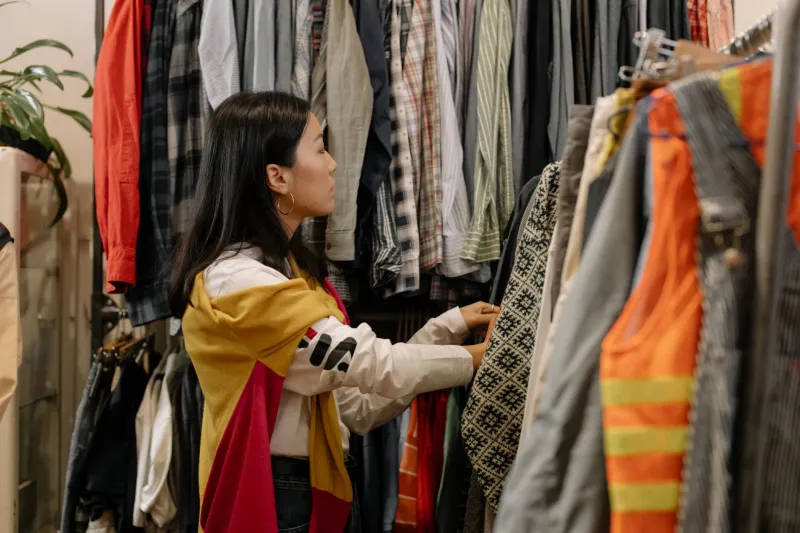
There is a particular kind of cognitive dissonance available exclusively at the intersection of fashion, sustainability, and social media, and nowhere is it more richly concentrated than in the modern American thrift experience. We have taken a practice born of genuine economic necessity, wrapped it in the aesthetics of environmental virtue, run it through the content machine, and emerged on the other side with vintage shops charging $85 for a fleece vest that someone's dad bought at Costco in 1997.
We did this together. Let's walk through how.
A Brief History of Who Thrifted and Why
For most of its existence, secondhand shopping was not a lifestyle choice. It was a practical response to a practical problem: clothing costs money, money is finite, Goodwill is right there. Generations of Americans built functional wardrobes out of other people's discards, not because it was aesthetically interesting or environmentally responsible, but because the alternative was unaffordable.
This is not ancient history. It is still the reality for a significant portion of the population, which becomes relevant later in this story.
Somewhere in the 2010s, the cultural positioning of thrifting began to shift. Vintage clothing gained traction as a genuine fashion movement. Sustainability concerns made secondhand shopping feel ethically superior to fast fashion. And crucially, a generation raised on internet culture discovered that finding something rare and cheap at a thrift store was not just economical — it was content.
The thrift haul video was born. And with it, everything changed.
The Influencer Pipeline: From Finds to Fees
The thrift haul genre is, on its face, charming. Someone goes to a secondhand store, finds interesting things, shows them to the internet. It has the treasure-hunt appeal of a good yard sale and the accessibility of a format anyone can replicate.
Except that it isn't quite that simple anymore.
The most successful thrift content creators have turned the format into a performance with significant production values and, critically, a business model. There are courses teaching people how to thrift for profit. There are paid guides to finding the best pieces. There are creators who have built six-figure businesses around the premise of showing other people how to shop secondhand — for a fee, naturally, which somewhat undermines the foundational premise of the enterprise.
The content itself has also reshaped the thrift landscape in ways that have real consequences. When a creator with two million followers films a haul at a specific Goodwill location, that location gets swarmed. Inventory gets picked clean by resellers who watched the video and headed out before the algorithm finished serving it. The casual thrifter — the person who actually needs the affordable clothes — arrives to find the good rack already gone, sorted through by someone filming a reaction video.
Sustainability content has, in some documented cases, made secondhand shopping less accessible to the people who need it most. This is the kind of irony that would be funny if it weren't so precisely on the nose.
The Boutique Vintage Markup and the Stories We Tell About It
Then there is the boutique vintage shop, which deserves its own paragraph and possibly its own congressional inquiry.
The modern curated vintage boutique — the kind with exposed brick, a carefully edited rack of 90s and early 2000s pieces, and a price list that would make your grandmother put down her iced coffee — is a genuinely fascinating economic phenomenon. These shops have identified that the labor of sourcing and curating secondhand clothing has value, and they are correct. Curation takes time and expertise. Restoration and cleaning cost money. Retail space in American cities is not cheap.
All of that is true. It is also true that $145 for a Gap denim jacket from 2001 is a price point that requires a specific kind of customer: one for whom the vintage purchase is a luxury choice rather than a budget solution. One for whom the sustainability angle is a bonus rather than the whole point. One who is, in short, shopping vintage as a status move.
And that customer exists in enormous numbers, which is why the boutique vintage model works. "I got this vintage" has become a phrase that signals taste, environmental awareness, and a kind of anti-mainstream credibility — all of which are things that people with disposable income are willing to pay for.
The blazer from 1994 is not cheaper than a new blazer. It is more expensive, in better condition, and comes with a better story. The story is the product.
The Sustainability Math Gets Complicated
Here is where the environmental case for thrifting — which is real — gets tangled up with the culture that has grown around it.
Buying secondhand instead of new does reduce demand for new production. It extends the life of existing garments. These are genuine environmental benefits, and they don't disappear just because the practice has become fashionable.
But the version of thrifting that gets content-ified and status-ified is not always the version that delivers those benefits cleanly. The reseller who buys fifty pieces from Goodwill to sell three of them on Depop and discards the rest has not obviously improved on the original thrift-store model. The influencer who thrifts a full haul for a video and then donates most of it back has created content about sustainability without necessarily practicing it. The person who buys a $180 vintage piece because it's cooler than buying new is making a luxury purchase with a sustainability wrapper — which is fine, but it's worth calling it what it is.
Performative sustainability is still performance. The earth doesn't get credit for the content.
What Thrifting Still Is, Underneath All of This
None of this is an argument against secondhand shopping. Thrifting, in its actual practice, remains one of the most sensible things you can do with a clothing budget — or without one. The Goodwill bins are still there. The estate sales still happen. The Depop listings still occasionally contain something extraordinary for twelve dollars.
But it is worth being honest about what the culture around thrifting has become, and who it serves. When secondhand shopping becomes a flex — when the point is not the savings or the sustainability but the story — it has moved into the same territory as every other fashion status game, just with better talking points.
You can absolutely thrift because you love the hunt, because you care about the environment, because you found a perfect coat for eight dollars and you will never financially recover from the joy of it. All of those are great reasons.
Just maybe don't charge people $49 for a guide on how to do it.
The whole premise was that it was free.