Retail Therapy Got a Psychology Degree and Now It's Charging You Full Price
Let's talk about the most successful rebrand in recent fashion history. Not a logo refresh. Not a celebrity collaboration. Something more sophisticated than either: the moment the industry discovered that if you attach a mental health framework to an impulse purchase, the customer not only buys the item — they feel good about buying it.
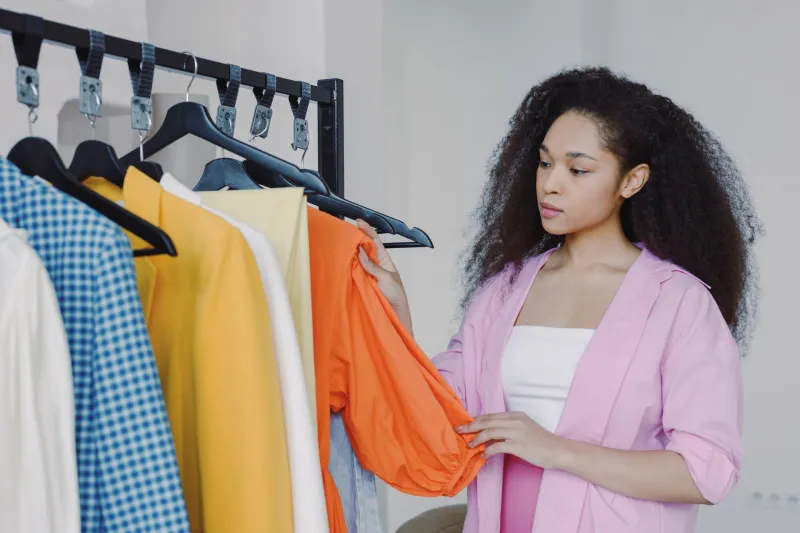
Enter dopamine dressing. Stage left. In a very bright color.
What It Actually Means (And What They're Saying It Means)
The clinical version first, because it deserves a fair hearing. Dopamine is a neurotransmitter involved in reward, motivation, and pleasure. There is legitimate, peer-reviewed research suggesting that what we wear can influence our mood and cognitive performance — a phenomenon psychologists call "enclothed cognition." Wearing something that makes you feel confident or joyful can have a measurable effect on how you carry yourself and engage with the world.
This is real. This is interesting. This is also not what the fashion industry is talking about when it tells you to buy the tangerine puff-sleeve blouse.
Dopamine dressing, as it exists in the cultural conversation, has been stretched from "clothing affects mood" into "buying colorful clothing will fix your mood," which is a significant and convenient leap. One is a psychological observation. The other is a marketing strategy wearing a lab coat.
The difference matters, and the industry is banking on you not stopping to find it.
The Timeline of a Trend Becoming a Therapy Session
Dopamine dressing as a named trend gained serious traction around 2022, when the collective post-pandemic mood was somewhere between exhausted and feral. People wanted color. People wanted joy. People wanted something after two years of sweatpants and ambient dread.
Fashion, to its credit, delivered. Bright colors, playful silhouettes, and maximalist accessories flooded the market. It was genuinely fun. It was also immediately identified by retailers as a framing opportunity too good to waste.
Within months, the language had shifted. It wasn't just "bold spring colors" anymore — it was mood-boosting bold spring colors. It wasn't a lime green mini skirt; it was a lime green mini skirt that "sparks joy" and "supports your mental wellbeing." Product descriptions started reading like wellness copy. Brand Instagram captions quoted psychology studies the way your college roommate quoted Nietzsche — selectively, confidently, and without fully reading the source material.
The neon shirt wasn't a neon shirt. It was a prescription.
The Third Neon Shirt Problem
Here is the thing about dopamine: it is not a renewable resource you can stockpile through purchases. The neurochemical hit you get from buying something new is real, but it is also temporary, diminishing, and specifically tied to novelty. The first neon shirt gives you a little rush. The second gives you less. By the third, you are chasing a feeling that the mechanism itself has made harder to achieve.
This is not a personality flaw. It is literally how the reward system works. And it is, not coincidentally, also the engine that drives repeat purchasing.
If wearing bright colors genuinely improved your mood in a sustained, meaningful way, you would buy one excellent yellow dress and wear it until it fell apart. You would not need a new "mood-boosting" piece every season. The fact that the trend requires constant refreshing — new colors, new silhouettes, new "joyful" pieces each quarter — is not a feature of dopamine dressing as a wellness practice. It is a feature of dopamine dressing as a retail strategy.
The industry doesn't want you to feel better. It wants you to feel almost better, perpetually, in a way that another purchase might resolve.
When Wellness Language Becomes a Checkout Button
The broader pattern here is worth naming, because dopamine dressing is just the most recent and colorful example of it. Fashion has been quietly absorbing the vocabulary of mental health and self-care for years, using therapeutic language to reframe consumption as healing.
"Treat yourself" became a cultural institution. "Self-care" expanded to encompass any purchase that felt indulgent. "You deserve this" appeared in so many checkout confirmation emails that it stopped meaning anything and started meaning everything. And now, "dress for your mental health" has joined the canon — a phrase that sounds like advice but functions like permission.
None of this is accidental. The wellness industry and the fashion industry have discovered enormous common ground in the space between feeling bad and wanting to feel better, and they have built a significant amount of real estate there. The message, stripped of its therapeutic coating, is consistent and ancient: something is missing, and we have the thing that will fill it.
The thing just comes in cobalt blue this season.
What Actually Helps (A Brief Detour Into Reality)
For the record, and because it seems worth saying: if wearing color genuinely lifts your spirits, wear the color. This is not a screed against bright clothes or the real pleasure of getting dressed in something that makes you feel alive. That pleasure is legitimate and doesn't need a scientific justification.
But if you are standing in the ZARA fitting room at 7 PM on a Tuesday, holding a tangerine two-piece set and telling yourself this is what your therapist would want for you — it might be worth a brief pause. Not because the outfit is wrong. Because the gap it's being asked to fill might be bigger than an outfit can reach.
Actual dopamine regulation involves sleep, movement, connection, and occasionally a licensed professional. It does not have an affiliate link.
The Color Stays. The Justification Can Go.
None of this requires abandoning color, joy, or the genuine pleasure of wearing something that makes you feel like the best version of yourself. Those things are real, and fashion at its best delivers them.
What can go is the framework that turned a styling choice into a therapeutic intervention, and a therapeutic intervention into a checkout occasion. You are allowed to buy the bright shirt because you like it, because it's fun, because life is short and yellow is a great color.
You don't need a neuroscience citation. You just need the shirt.
The industry will survive without the PhD.