Nobody Knows What to Wear to Work Anymore and HR Is Definitely Not Going to Help You
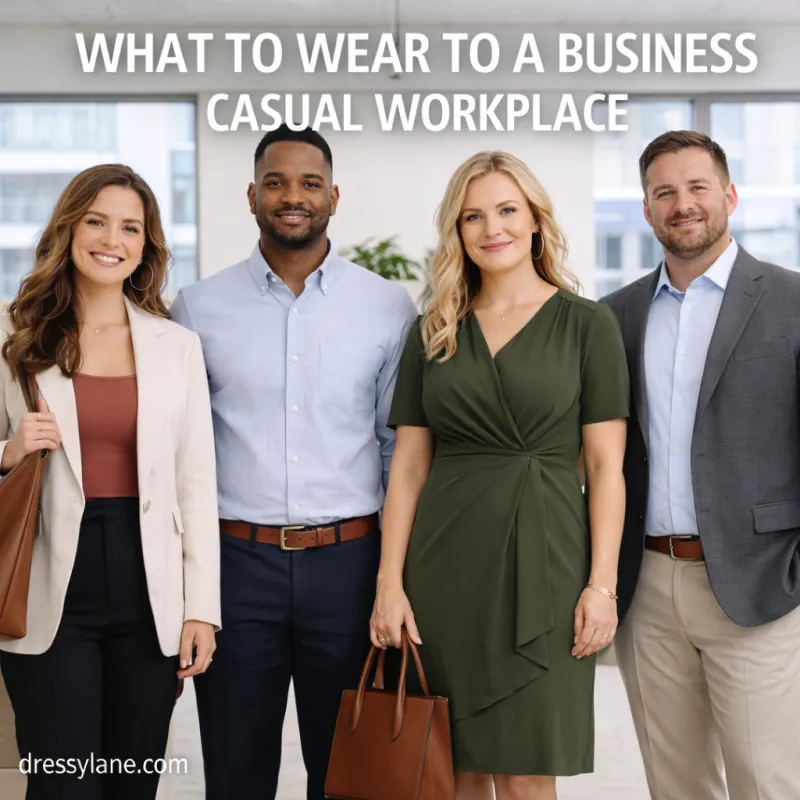
Photo: diverse office workers different outfits business casual workplace, via www.dressylane.com
Somewhere between March 2020 and right now, the American office dress code quietly had a complete nervous breakdown. It didn't announce this. It didn't send a company-wide email. It just sort of... dissolved, leaving in its place a vague, anxious fog that every working person in the country now navigates five days a week (or two days a week, or whenever the hybrid schedule says they have to actually show up).
The fog has a name. It's called business casual. And it means absolutely nothing anymore.
A Brief History of How We Got Here
Once upon a time — let's say 2019, which at this point feels like a different civilization — business casual was confusing but at least consistently confusing. It meant khakis. It meant button-downs with the sleeves rolled up in a way that said "I am approachable but also competent." It meant blazers over blouses and loafers that technically qualified as dress shoes if you didn't look too closely.
Then the pandemic happened, and roughly 70 million Americans spent the better part of two years working from their living rooms in varying degrees of pajama-adjacent clothing. We lost the muscle memory. We forgot the conventions. We discovered, with genuine surprise, that we could be just as professionally functional in a hoodie as in a button-down, and that revelation was extremely difficult to un-have.
When offices began reopening, nobody could agree on what "back to normal" meant for getting dressed. So instead of establishing a new normal, most workplaces simply... didn't. HR sent an email referencing the existing dress code policy, which was last updated in 2014 and still listed "no visible tattoos" as a guideline. Everyone nodded. Everyone continued wearing whatever felt approximately right. The chaos was locked in.
The Five Factions of the Modern American Office
In the absence of clear guidance, the contemporary workplace has fractured into distinct sartorial tribes, each operating according to its own internal logic and each quietly judging all the others.
The Over-Dressers. These are the people who decided that the office's return was a personal opportunity to reclaim the professional aesthetic they'd been denied during remote work. They arrive in full tailored looks. They have pocket squares. They own matching separates. They are dressed for a meeting with the board of directors, even when the meeting is a fifteen-minute check-in about Q3 deliverables. They are both admirable and slightly exhausting.
The Zoom-Top Warriors. Masters of the half-effort. Blazer on top, technically presentable from the shoulders up, whatever they want from the waist down. This system worked flawlessly for two years and they see no compelling reason to abandon it now that they're physically present in the building. They have simply transferred the logic from the home office to the real one. From a distance, they look entirely professional. Do not ask them to stand up suddenly.
The Athleisure Ambassadors. These individuals are wearing what they wore to the gym, or what they might wear to the gym, or what they bought from a brand that implies gym adjacency while being designed primarily for sitting. The sneakers are expensive. The joggers are technically "tailored." There is a blazer involved, hanging off the whole situation like a peace treaty. They will tell you this is smart casual. They are not wrong, exactly, but they're not right either.
The 'I Saw Someone Wear This Once' Gamblers. A fascinating group. They have no strong opinions about office dress codes. They simply observe what other people wear, form a rough mental average, and aim somewhere in that general vicinity. Their daily outfit decision is essentially a statistical exercise. Some days they nail it. Some days they arrive to find they've dramatically miscalibrated and are the only person in the open-plan office wearing a full blazer on casual Friday. They absorb this information and recalibrate for next week.
The Resigned Comfort Maximalists. They have made peace with the chaos by simply optimizing for personal comfort and calling it a day. Soft fabrics. Elastic waistbands. Shoes that could generously be described as "loafers" but are functionally slippers with better PR. They are not trying to make a statement. They are trying to get through the day. Respect, honestly.
The Satirical Flowchart: What to Wear to a Meeting That Might Also Be a Zoom Call
Start here: Is this meeting in person?
→ Yes. Is it with external clients?
- Yes → Wear something with buttons. Iron it. You're fine.
- No → Is your manager's manager attending?
- Yes → Elevate. Blazer. Real shoes. Make an effort.
- No → Business casual. Which means whatever you think business casual means, which is apparently unique to you.
→ Maybe. The invite says "conference room" but also has a Zoom link and nobody confirmed.
- Is the conference room on your floor?
- Yes → Wear your normal office outfit. Bring the laptop anyway. Assume chaos.
- No → You're going to a different floor. This is now a hybrid situation. Wear pants that look good standing up.
→ It's Zoom.
- Camera on or off?
- Off → Wear whatever. This is your moment. Thrive.
- On → Blazer over the t-shirt. You know the drill. You've been doing this for four years.
What Nobody in HR Will Actually Tell You
Here is the honest, unvarnished truth that no HR professional will commit to in writing: there is no dress code anymore. There are vibes. There are rough cultural norms that vary by office, by floor, by team, and by what the most senior person in the room is wearing on any given day. The "policy" exists as a document somewhere on the company intranet, last accessed in 2017, largely irrelevant to current conditions.
The actual dress code of the modern American office is: look like you tried, don't make anyone uncomfortable, and read the room.
This is not a satisfying answer. It is, however, the accurate one.
A Practical Survival Guide for the Dress-Code Wilderness
Since clarity is not coming from above, here is what we at Voguishly recommend for navigating the post-pandemic office fashion landscape with your dignity intact:
Invest in the middle ground. The sweet spot between "too formal" and "clearly stopped trying" is a place you can live comfortably. Nice trousers, a good sweater, clean shoes that aren't sneakers. You will never be the most overdressed or underdressed person in the room. This is a good place to be.
Own at least one blazer that can save you. When in doubt — when you've arrived somewhere and immediately clocked that you've miscalculated — a blazer fixes almost everything. It is the fashion equivalent of a universal remote. Keep one at your desk if necessary.
Stop trying to decode what other people are doing and just pick something. The Gamblers have the right general instinct but the wrong methodology. The office dress code is not a puzzle with a correct answer. It's a daily improvisation. Make a decision, commit to it, and move on.
And if HR ever does send that clarifying email? Screenshot it. Frame it. It may be the rarest document of our era.