Case Closed: The Outfit Repeater Is Right and Fashion Culture Owes Them an Apology
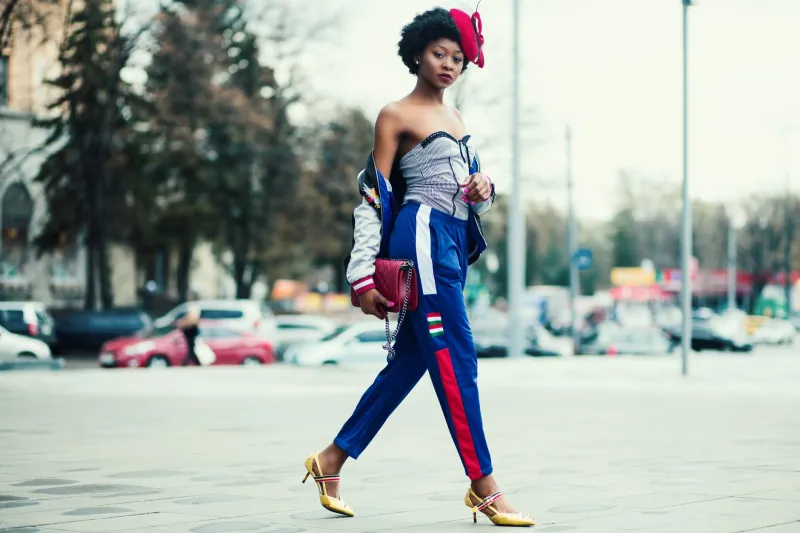
This is a manifesto. It is also, technically, a legal brief. And if you've ever posted a photo in the same jeans-and-blazer combination you wore three weeks ago and immediately wondered whether anyone would notice, this one's for you.
We, the committed outfit repeaters of America, are done apologizing.
We have worn the same midi skirt to four separate events. We have appeared in the same leather jacket on our Instagram grid in October, December, and again in March, with zero editorial comment. We have rotated through the same three "going out" tops since 2021 and will continue to do so until they disintegrate or we do, whichever comes first.
And we are thriving.
The Charges Against the Outfit Repeater (As Presented by Fashion Culture)
Before we present the defense, let us acknowledge the prosecution's case, as delivered by approximately every fashion influencer, fast fashion brand email, and "get ready with me" video published in the last decade.
The charges are as follows:
Count One: Wearing the same outfit to more than one social gathering, thereby suggesting a limited wardrobe and/or a relaxed relationship with novelty.
Count Two: Appearing in identical clothing across multiple social media posts, creating what industry insiders have dramatically termed a "grid inconsistency."
Count Three: Failing to participate in the sacred American ritual of treating every occasion — a birthday dinner, a Tuesday happy hour, a trip to the farmer's market — as an opportunity to debut something new.
The sentence, apparently, is the ambient social pressure to keep buying things you don't need to avoid being perceived as someone who doesn't keep buying things they don't need.
We reject this entirely.
Exhibit A: The Fictional Testimonials of Committed Repeaters (All of Whom Are Doing Fine)
"I wore the same black dress to my cousin's graduation, my work holiday party, and a friend's engagement dinner. At the engagement dinner, someone told me I looked great. I said thank you. I did not mention it was the same dress. Nobody cared. Nobody has ever cared. I spent the money I saved on a really good dinner instead." — Morgan T., Denver, CO
 Photo: Denver, CO, via www.tripsavvy.com
"My most-liked Instagram post of last year featured a flannel shirt I've owned since 2019. I've worn it in at least six photos. The algorithm didn't penalize me. My followers didn't revolt. One person asked where it was from. I said Target. They said 'nice.' That was the entire interaction." — Jamie R., Portland, OR
 Photo: Portland, OR, via www.unitedaccess.com
"I have one 'nice going out' top. I've been photographed in it at least eleven times over three years. My friends know it. My family knows it. At this point, it's basically a member of the family. We're all very happy." — Alex P., Chicago, IL
 Photo: Chicago, IL, via windows10spotlight.com
The Legal Precedents Supporting the Repeat Outfit (Fictional, But Compelling)
In the landmark case of Common Sense v. The Fast Fashion Industrial Complex (filed internally, never actually litigated), the court found in favor of the plaintiff on the following grounds:
Precedent One: The Kate Middleton Doctrine. Senior public figures, celebrities, and otherwise high-profile individuals have been repeating outfits for decades with zero lasting consequences. The internet notes it. The internet moves on. So does everyone else.
Precedent Two: The Capsule Wardrobe Contradiction. The same fashion media ecosystem that quietly shames outfit repeaters has also spent the last eight years enthusiastically promoting the capsule wardrobe — a concept built entirely on wearing the same things repeatedly. You cannot have it both ways. The court notes the hypocrisy. The court is not impressed.
Precedent Three: The Nobody-Is-Watching Principle. Extensive real-world observation confirms that the vast majority of people you interact with on any given day are not cataloguing your outfits, cross-referencing them against your Instagram archive, or keeping any kind of running tally of your sartorial novelty. They are thinking about their own problems. You are free.
What the Repeat Outfit Is Actually Saying
Let's be clear about what you're communicating when you wear the same outfit again, without apology, without a disclaimer caption, without staging an elaborate flat-lay to make it look like a completely different look:
You are saying: I know what works for me.
You are saying: I am not performing novelty for your entertainment.
You are saying: I found a combination of fabric and cut that makes me feel like a functional, put-together human being, and I intend to continue benefiting from that discovery.
This is not laziness. This is efficiency. This is the wardrobe equivalent of finding a great parking spot and having the good sense to keep using it.
A Brief Note on the 'But What About Sustainability?' Angle
We could make the sustainability argument here, and it's a valid one — the fashion industry is one of the most environmentally impactful on the planet, and every outfit worn multiple times is a small but real act of resistance against the churn of overconsumption.
But honestly? We're not even going to lean on that. We're not repeating outfits because we're noble. We're repeating outfits because the outfit is good, we already own it, and buying a new one just to avoid wearing this one again is one of the more quietly absurd things fashion culture has managed to convince people is normal.
The Manifesto, Condensed
Wear the dress again. Post the photo. Do not write a caption that says "yes, I've worn this before, deal with it" because that implies there is something to deal with, and there isn't.
Your outfit does not expire. Your style is not a subscription service. And the people who love you — or even just follow you casually on Instagram — are not monitoring your grid for repeat appearances. They're too busy worrying about their own.
The outfit repeater is not a fashion criminal. The outfit repeater is, in fact, the most honest person in the room: someone who bought something they actually liked, wore it because they liked it, and will continue to wear it for exactly as long as it continues to be something they like.
Case closed. Court adjourned. You can wear the blazer again.