Saving the Planet Has a Suggested Retail Price of $340
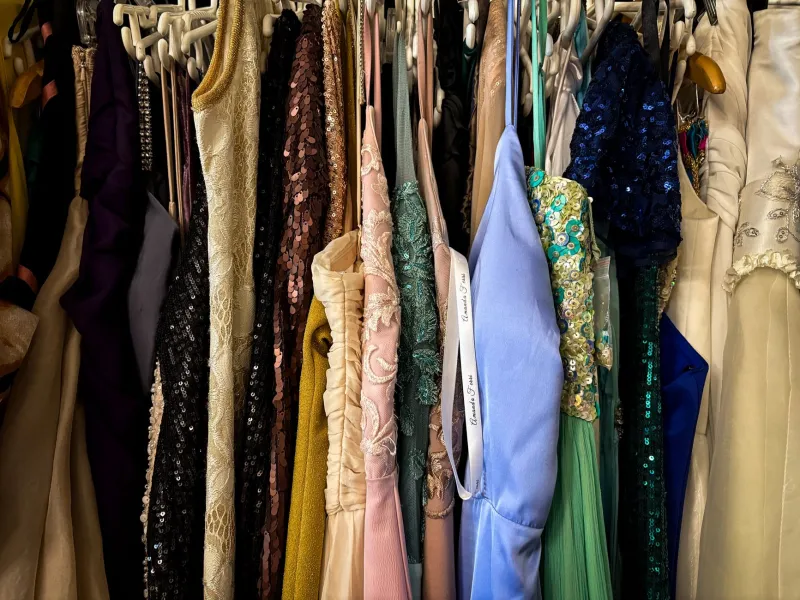
Somewhere between your third oat milk latte and your second scroll through an eco-conscious brand's Instagram, it happened. You saw the tote bag. Organic cotton, hand-dyed with plant-based pigments, assembled by artisans who are paid a living wage and apparently also get dental. It cost $95. You bought it. You felt, briefly, like a hero.
This is the sustainable fashion experience in its purest form: equal parts virtue and financial recklessness, wrapped in undyed linen and shipped in compostable packaging.
The Guilt-to-Purchase Pipeline Is Remarkably Efficient
Here's what the eco-fashion industry figured out that nobody in fast fashion ever quite managed: guilt is not a deterrent. Guilt, properly deployed, is a marketing strategy.
Fast fashion makes you feel bad after you buy something. Sustainable fashion makes you feel bad before — and then offers you the cure at a significant markup. The internal monologue goes something like: I could buy the $18 jeans, but those were made under conditions I don't want to think about, and if I buy the $180 jeans, I am technically a better person. The $180 jeans win every time, because nobody wants to be the villain in their own wardrobe story.
Brands have gotten extraordinarily good at this. The product pages read less like retail listings and more like ethical dossiers. You're not buying a jacket. You're buying 14 hours of fair-wage labor, 3.2 pounds of recycled ocean plastic, and the knowledge that a small family farm in Portugal is still operational because of you specifically.
At $420, it's practically a donation.
Let's Actually Look at the Numbers
For the sake of journalistic integrity — and because Voguishly readers deserve to be confused by math as well as aesthetics — let's break this down.
A standard fast fashion t-shirt: $12. A comparable sustainable version: $68 to $95, depending on how many certifications the brand has collected. The sustainable shirt is made better, lasts longer, and comes with a story about the woman in Peru who sewed the hem. All of that is genuinely worth something.
But here's the quiet irony that nobody in the sustainability space wants to discuss over their regenerative agriculture dinner: the people most targeted by eco-fashion marketing — young, urban, socially conscious, extremely online — are also statistically among the least financially stable demographics in America. They are paying a premium they can't always afford to solve a systemic problem that their individual purchase will not actually fix.
This is not a takedown of sustainable fashion. The production practices are often genuinely better. The workers are often genuinely paid more fairly. These things matter. This is, however, a gentle inquiry into who exactly benefits when a 26-year-old in Brooklyn stretches her budget to buy ethically made trousers she'll wear twice before the algorithm convinces her the silhouette is over.
The Certification Industrial Complex
You've seen the badges. GOTS certified. B Corp. Bluesign approved. Fair Trade. Climate Neutral. Carbon offset. Regenerative. Circular. Cradle-to-cradle. Each one represents a real standard and a real audit process, and each one also adds somewhere between $8 and $40 to the final retail price.
Certifications are not a scam. They are, however, a fascinating example of how doing the right thing becomes a tiered pricing structure. Want the shirt that's just not terrible? $60. Want the shirt that's actively good? $95. Want the shirt that's basically a TED Talk you can wear? $140. The planet appreciates your upgrade.
What's genuinely tricky is that consumers have no real way to evaluate which certifications matter most, so they've defaulted to a simple heuristic: more badges equals more ethical equals more expensive equals I should probably buy it. Brands have noticed.
The People Caught in the Spiral
Talk to anyone who's been deep in the sustainable fashion world for more than six months and you'll find a specific kind of exhaustion. There's the woman who spent three weeks researching the most ethical winter coat option, bought it for $590, and then saw it on a fast fashion site for $45 six months later — knockoff, obviously, but still. There's the guy who replaced his entire wardrobe with sustainable pieces over two years and spent, by his own estimate, roughly $4,000 more than he would have otherwise. He feels good about it. He also feels slightly broke.
And then there's the most common archetype: the person who buys one or two expensive sustainable pieces per year, continues buying fast fashion for everything else, and has constructed an elaborate internal framework for why this is fine, actually.
Spoiler: it's fine. The all-or-nothing framing that eco-fashion culture often promotes — buy ethical or you're complicit — is itself a product of the same marketing apparatus that sells you the $280 sneakers. Real sustainability is complicated and imperfect and doesn't always look like a beautifully curated grid of neutral-toned clothing.
So Does It Actually Justify the Price?
Sometimes, yes. Genuinely. A well-made piece that lasts a decade instead of two washes is a better financial and environmental investment. Paying workers fairly costs more money, and that cost has to go somewhere. Supply chains that don't cut corners are more expensive to operate. These are not invented justifications — they are real economics.
But the sustainable fashion industry has also gotten comfortable charging luxury prices for mid-tier aesthetics and calling the gap 'the ethical premium,' and that part deserves a raised eyebrow.
The planet is worth saving. Your rent is also due. Somewhere in the tension between those two facts is where most of us are actually doing our shopping — and no amount of compostable packaging is going to make that feel elegant.
Buy the thing if you love it and can afford it. Skip the guilt trip either way. The Earth has bigger problems than your fast fashion jeans, and frankly, so do you.