Authentically Identical: The Statistical Impossibility of Having a Unique Aesthetic Online
Picture, if you will, a woman in her late twenties. She lives in Austin, or Nashville, or a gentrifying neighborhood in Denver. She has a curated TikTok presence and an Instagram grid that trends warm. She is wearing: straight-leg mid-wash denim, a fitted white tee with a subtle detail (maybe a seam, maybe a pocket, maybe an extremely tasteful embroidered logo), a tan or cream blazer with a slightly oversized shoulder, and either white sneakers or a heeled mule in a neutral. She has a small gold chain. She has a tote bag. The tote bag is either canvas with a cultural reference or a structured mini in a muted earth tone.
Now picture another woman. Different city. Different platform. Different follower count. Different bio describing a different unique personal journey through style. Same outfit.
And another. And another. And another.
This is not a coincidence. This is the algorithm having opinions.
The Aesthetic-to-Uniform Pipeline
The vocabulary of online fashion has given us a rich taxonomy of supposedly distinct aesthetics: quiet luxury, coastal grandmother, dark academia, clean girl, old money, cottagecore, mob wife (briefly), and approximately forty-seven micro-trends that lived and died within a single news cycle. Each aesthetic arrives with its own mood board, its own playlist, its own founding mythology about what kind of person wears it and what that says about her inner life.
The problem is that aesthetics, once they become content categories, immediately become uniforms. The "clean girl" aesthetic — which theoretically represents a stripped-back, effortless approach to personal style — has a remarkably specific costume: slicked-back bun, gold hoops, minimal makeup, fitted neutral basics, a Stanley cup or its predecessor the Hydro Flask. The aesthetic that was supposedly about simplicity became a highly replicable look with its own shopping list.
This is not unique to clean girl. Every aesthetic that achieves critical mass online undergoes the same transformation: from mood to mood board to shopping guide to Amazon storefront to the point where you can identify which TikTok rabbit hole someone fell into based entirely on what they're wearing to brunch.
The Algorithm Is the World's Most Influential Stylist (And It Has One Look)
The mechanics of this homogenization are not mysterious. Social media algorithms reward engagement, and engagement is driven by familiarity. Content that looks like content people already like performs well. Content that looks unfamiliar or genuinely strange — the stuff that might represent actual creative risk — gets deprioritized in favor of content that confirms what the audience already knows it enjoys.
This creates a feedback loop with a very specific stylistic destination. Influencers, rationally responding to their analytics, gravitate toward the looks that perform. The looks that perform are the looks that already have an audience. The audience for those looks grows because the algorithm keeps serving them. The influencers who are not yet famous study the influencers who are and identify the visual language of success. They adopt it. They post. The algorithm recognizes familiar patterns and rewards them.
Repeat until everyone in the mid-size influencer tier is wearing the same blazer.
This is not cynicism about influencers as individuals. Most of them are making completely rational professional decisions. It is, however, an honest accounting of what those rational decisions produce at scale: a content landscape where "personal style" is less a reflection of individual taste and more a performance of belonging to a recognizable category.
The Dupes Accelerant
The speed of aesthetic replication has been turbocharged by the dupe economy — the thriving ecosystem of content dedicated to finding cheaper versions of trending pieces. Dupe culture is, on its surface, a democratizing force. Not everyone can spend $400 on the exact bag an influencer is carrying, but the $38 version from a manufacturer who will not be named makes the look accessible to a much broader audience.
The unintended consequence is that a single trending piece can now propagate across every income tier simultaneously. The original, the mid-range interpretation, and the $18 fast fashion version all arrive in the market within weeks of each other. Within a month, the piece is everywhere. Within two months, it's over. Within three months, someone is posting about how they can't believe they fell for that trend.
The cycle has compressed to the point where the lag between "this is a fresh look" and "this is everywhere and therefore uncool" is now measured in weeks rather than seasons. Which means the pressure to identify the next fresh look is constant and relentless, which means everyone is watching the same early adopters for signals, which means everyone moves in the same direction at the same time.
The Authenticity Paradox
The word "authentic" is doing enormous and largely unsupported work in influencer culture. The authentic personal style, the authentic aesthetic, the authentic self expressed through clothing — these are the stated goals of essentially every fashion creator on every platform, and they are being pursued through a process that is structurally designed to produce the opposite outcome.
You cannot find your authentic personal style by watching what other people wear and identifying which version resonates most. That is not authenticity. That is a preference survey. The result is not your style — it is a style you have selected from a menu of pre-approved options, which is a fine and normal thing to do, but it should probably not be described as a unique creative expression of your inner self.
Actual aesthetic individuality — the kind that produces looks that are genuinely distinctive, that don't fit neatly into an existing content category, that might not perform particularly well because they're unfamiliar — is not just rare online. It is, by the logic of algorithmic curation, actively discouraged.
The Case for Offline Weirdness
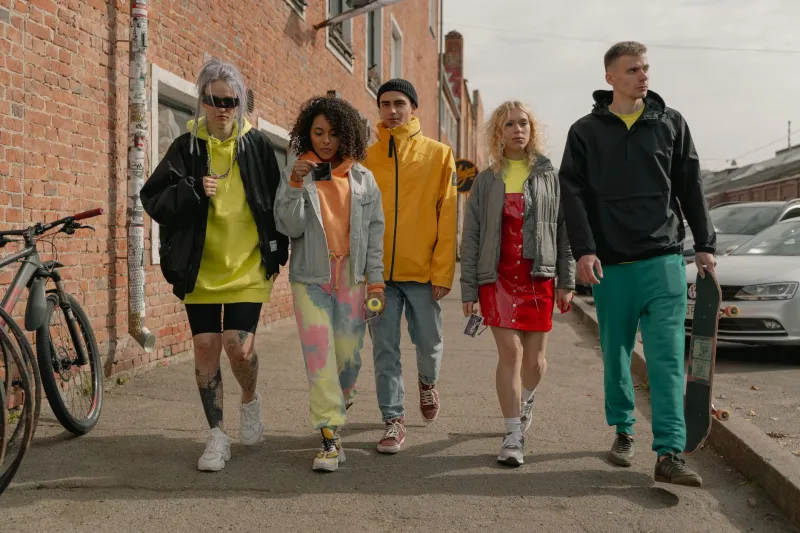
The most interesting dressers you will encounter this week are almost certainly not influencers. They are the person on the subway whose outfit you cannot categorize, who is clearly wearing exactly what they want to wear with no apparent concern for whether it photographs well or fits a recognizable aesthetic. They are the vintage dealer who has assembled a wardrobe over twenty years that looks like nothing else. They are the person at the office who wears things that make you slightly uncertain and then, three weeks later, you realize you've been thinking about their coat ever since.
These people are not building an audience. They are just getting dressed. The absence of an audience, it turns out, is an extraordinary creative freedom.
Personal style that exists exclusively for the algorithm will always, eventually, look like everyone else's personal style that exists exclusively for the algorithm. The math on this is not complicated.
Wear the thing that doesn't have an aesthetic name yet. It won't get many saves. It might be the most stylish decision you make all year.