Your Sneakers Are Talking and Everyone Can Hear Them
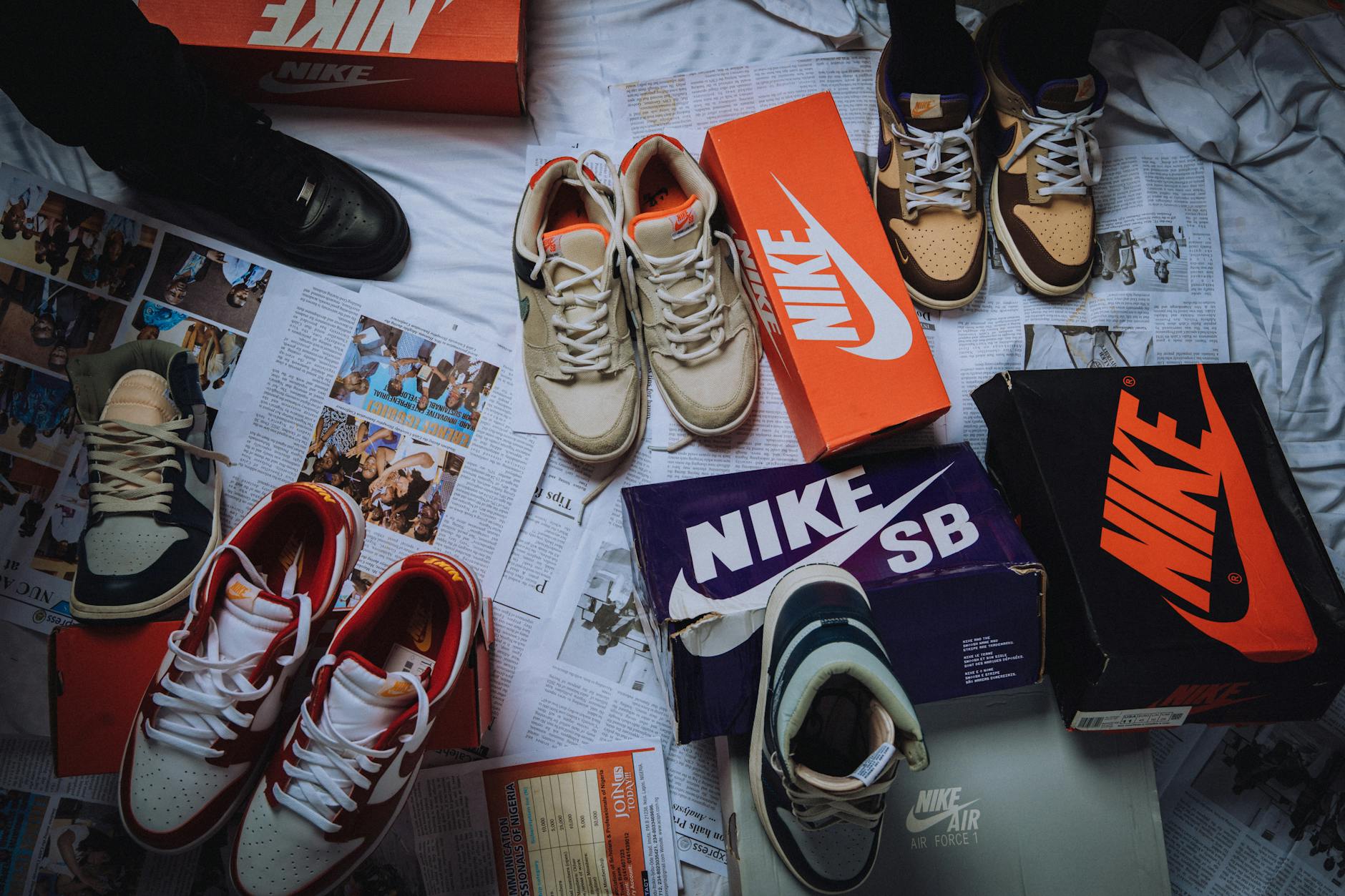
Your Sneakers Are Talking and Everyone Can Hear Them
Let's take a moment to appreciate how completely unhinged the American sneaker situation has become. We live in a country where grown adults set 6 a.m. alarms to enter a randomized digital lottery for the chance to spend $180 on a shoe. Where a pair of New Balances can signal either "I'm a dad of three in suburban Ohio" or "I'm a downtown creative who reads Dimes Square discourse" — and the difference is entirely in the colorway. Where people have climate-controlled storage units dedicated to footwear they will never actually wear.
Sneakers are no longer shoes. They are identity documents. And America issued them to itself without any of us fully consenting to the arrangement.
How Did We Get Here
The shift happened gradually and then all at once, the way most cultural avalanches do. For most of the 20th century, sneakers were functional — you wore them to play sports, mow the lawn, or do the specific kind of casual errand that didn't require real shoes. Then Nike signed a 21-year-old named Michael Jordan in 1984 and everything changed forever.
The Air Jordan didn't just create a sneaker — it created a narrative. Suddenly a shoe could carry a story, a mythology, a sense of aspiration. Kids weren't buying rubber soles; they were buying proximity to greatness. The sneaker industry clocked this energy, turbocharged it, and has been running it hot ever since.
By the 2010s, the collector market had gone full art-world. Sneakers were displayed on shelves, photographed like portraits, and resold at markups that would make a real estate agent blush. StockX launched in 2016 and gave the whole enterprise the veneer of a legitimate financial market, which is either genius or a sign that we've collectively lost the plot. Possibly both.
The Drop Culture Problem (And Also the Drop Culture Genius)
Nothing illustrates sneaker culture's particular brand of beautiful absurdity quite like the modern "drop." A brand announces a limited release. The internet convulses. Bots immediately purchase 80% of the inventory. The remaining 20% goes to humans who either got lucky in a digital queue or have somehow configured their router for maximum checkout speed like it's 2003 and they're trying to win concert tickets.
The shoes then appear on resale sites at three times retail within the hour.
Is this a functional system? Absolutely not. Is it an extraordinarily effective way to generate cultural heat and make a $150 shoe feel like a rare artifact? Devastatingly yes. The scarcity is the product. The frustration is the marketing. And somehow, every time, it works — because a shoe you had to fight for feels different on your feet than one you just walked in and bought. Irrational? Sure. Human? Completely.
What Your Sneakers Are Actually Saying About You
Here's the breakdown nobody asked for but everyone needs. Consider this your unsolicited sneaker personality reading.
Nike Air Force 1s (classic white): You are either 17, extremely confident in your basics, or a person who has fully made peace with the fact that you'll never be a sneakerhead and that's fine. This is a compliment. The AF1 is the white t-shirt of shoes — unkillable, universally flattering, and quietly the most correct choice in the room.
New Balance 990 series: You either discovered these through a fashion moment or you've been wearing them since 2009 and you're mildly irritated that they became cool because now they're harder to find in your size. Either way, you make good coffee and have opinions about furniture.
On Clouds: You work in tech, consulting, or wellness. You have described a shoe as "a game changer" in a non-ironic context. You own a Patagonia vest. None of this is an insult.
Yeezys (any era): You bought these at a specific moment in cultural history and the timeline of that moment now determines whether this is a flex or a complicated conversation. We wish you well.
Salomon XT-6s: You saw them on a mood board, decided you were a trail runner, and have since worn them exclusively on city sidewalks. You look great. You have never been on a trail.
Classic Converse Chuck Taylors: You are either an artist, someone who dresses like an artist, a teenager, or a person who fundamentally does not think about shoes and landed here by default. The Chuck Taylor does not judge. It has seen everything.
Rare limited-edition resale sneakers: You are either very serious about this hobby or you're wearing them to communicate that you are very serious about this hobby. The shoe is working. People have noticed.
The Sneakerhead Paradox
Here's the quietly funny thing about serious sneaker culture: it is simultaneously the most anti-fashion corner of fashion and the most fashion corner of anti-fashion. Sneakerheads will tell you they're not into "fashion" — they're into sneakers, which is different, which is a culture, which is a community. And they're right. But also they are absolutely making aesthetic choices with social signaling consequences, which is the literal definition of fashion, so.
The difference is the seriousness. High fashion has always had a certain performative irony — a wink at itself. Sneaker culture does not wink. It is committed. A man who has memorized the entire release history of the Nike SB Dunk is not doing a bit. He is living his truth, and you will respect it.
And honestly? That commitment is kind of admirable. In a world full of people who claim not to care about anything, the sneakerhead cares enormously about something extremely specific. There's a version of that which is genuinely cool.
The Part Where We Admit the Shoe Matters
After all the jokes about lottery entries and climate-controlled storage, here's the honest truth: a great sneaker really does complete an outfit. Not in the way a handbag does, or jewelry, or even a watch — but in a more foundational way. The right shoe grounds everything above it. It's the punctuation at the end of a sentence that determines whether the whole thing reads as confident or confused.
Sneakers democratized that power. You don't need a suit or a dress or a particular body type to look put-together in a clean pair of shoes. You just need the right ones. Which is why we're all still setting 6 a.m. alarms, losing the lottery, and paying resale prices we swore we'd never pay.
The shoe wins. It always wins.