The Origin Story
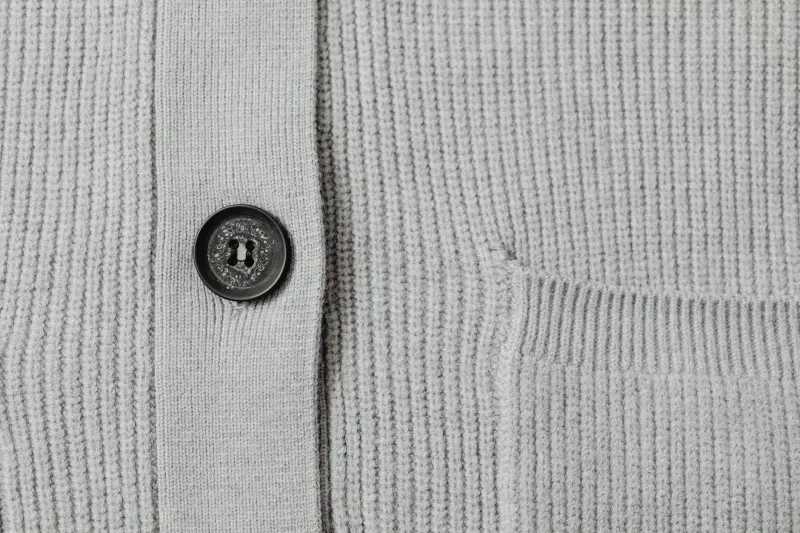
Every great love affair has a meet-cute, and mine happened in the clearance section of a department store three years ago. There it was: an oversized cardigan in that perfect shade of gray that goes with everything and commits to nothing. Marked down from $89 to $23, it felt like destiny wearing a 70% off sticker.
I told myself I needed a "layering piece." What I actually needed, though I didn't know it then, was a wearable security blanket that could masquerade as adult clothing. The cardigan and I were about to embark on a relationship that would make my actual romantic partnerships look casual by comparison.
The Honeymoon Phase
Those first few months were magical. The cardigan was everything I wanted in outerwear: forgiving, versatile, and completely non-judgmental about my life choices. Bad day at work? Cardigan. Awkward family dinner? Cardigan. Existential crisis at 2 AM? You guessed it.
It paired beautifully with jeans for casual Friday, elevated sweatpants to "put-together loungewear," and somehow made every outfit look intentionally effortless. I started receiving compliments—not on the cardigan specifically, but on looking "comfortable and stylish," which I now realize was code for "you seem emotionally stable today."
The Dependency Develops
Somewhere around month six, the relationship shifted from appreciation to dependency. The cardigan wasn't just a clothing choice anymore; it was emotional armor. Bad meeting coming up? I needed my cardigan for confidence. Feeling vulnerable? The cardigan provided literal and metaphorical coverage.
Friends started to notice. "Didn't you wear that yesterday?" they'd ask, with the tone people use when they're concerned about your wellbeing but trying to be casual about it. "It's a different outfit," I'd protest, which was technically true. Same cardigan, different emotional crisis underneath.
The Intervention Attempts
By year two, my inner circle had moved from gentle observation to active concern. My sister bought me a "replacement" cardigan for Christmas, in a different color and slightly different style. "For variety," she said, but her eyes said "please, I'm begging you."
The replacement cardigan hung in my closet like a well-meaning impostor. It was perfectly fine—nice, even. But it wasn't MY cardigan. It didn't know my secrets. It hadn't been through the trenches with me. It was like asking someone to replace their childhood teddy bear with a newer, objectively better teddy bear. Technically superior, emotionally vacant.
The Physical Evidence
Let's address the elephant in the room: my cardigan is not aging gracefully. There's a small hole near the left elbow that I tell myself adds character. The cuffs are stretched out from nervous fidgeting during Zoom calls. There's a faint stain on the front that I've convinced myself is invisible to everyone else (it's not).
The pilling situation has reached a point where lint rollers flee in terror. The fabric has developed a texture that can only be described as "lived-in," which is a polite way of saying it looks like it's been through a few too many emotional support sessions.
The Psychology of Comfort Dressing
There's actual science behind my cardigan codependency, and it's not entirely pathological. Comfort clothing triggers the release of oxytocin, the same hormone associated with bonding and stress relief. When we wear clothes that feel emotionally safe, our cortisol levels drop and our overall sense of wellbeing increases.
In a world that often feels chaotic and unpredictable, having one consistent, reliable piece of clothing becomes a form of self-care. The cardigan isn't just fabric—it's a portable safe space, a wearable manifestation of stability in an unstable world.
The Social Implications
But here's where it gets complicated: my emotional support cardigan has started affecting my social interactions. I've turned down invitations to events where I couldn't wear it. I've felt genuine anxiety when it's in the wash. I once packed it for a weekend trip and then worried the entire time about something happening to it.
This is when you know you've crossed from "favorite piece" into "concerning attachment." When your relationship with a piece of clothing starts dictating your social calendar, it might be time for some reflection.
The Great Debate
My friends are divided into two camps: Team Intervention and Team Enable. Team Intervention believes I need to retire the cardigan for my own good, that I'm limiting my personal growth by clinging to one security blanket. They make valid points about trying new things and not letting fear dictate wardrobe choices.
Team Enable argues that life is hard enough without giving up the things that bring genuine comfort. They point out that I'm not hurting anyone, I'm consistently dressed, and there are worse coping mechanisms than an oversized sweater. Also valid points.
The Broader Cultural Context
I'm not alone in this codependent clothing relationship. Across America, closets are filled with emotional support garments: the college sweatshirt that's more holes than fabric, the jeans that fit perfectly exactly once and never again, the dress that made you feel beautiful at a crucial moment fifteen years ago.
We live in an era of unprecedented uncertainty, and comfort dressing has become a form of emotional regulation. The rise of athleisure, the popularity of oversized everything, the cultural shift toward prioritizing comfort over formality—it's all connected to our collective need for clothes that feel like hugs.
The Path Forward
So where does this leave me and my beloved cardigan? Therapy might actually be helpful—not couples therapy, obviously, but some individual work on why I've outsourced so much emotional regulation to a piece of knitwear.
Maybe the goal isn't to eliminate the cardigan but to expand my emotional support wardrobe. To find other pieces that make me feel safe and confident, so I'm not putting all my psychological eggs in one very pilled basket.
The Acceptance Stage
For now, I'm choosing acceptance over action. Yes, my cardigan and I have an unusually intense relationship. Yes, it's probably not entirely healthy. But it's also not the worst thing in the world to have a piece of clothing that makes you feel like everything's going to be okay.
Maybe the real question isn't whether I need to break up with my cardigan, but whether I need to stop feeling guilty about having found something that brings me consistent comfort and joy. In a world full of uncertainty, having one reliable constant—even if it's slightly pilling—might not be pathological.
It might just be human.