Obsessed, Justified, Regretful: The Emotional Rollercoaster of Owning an 'It' Bag
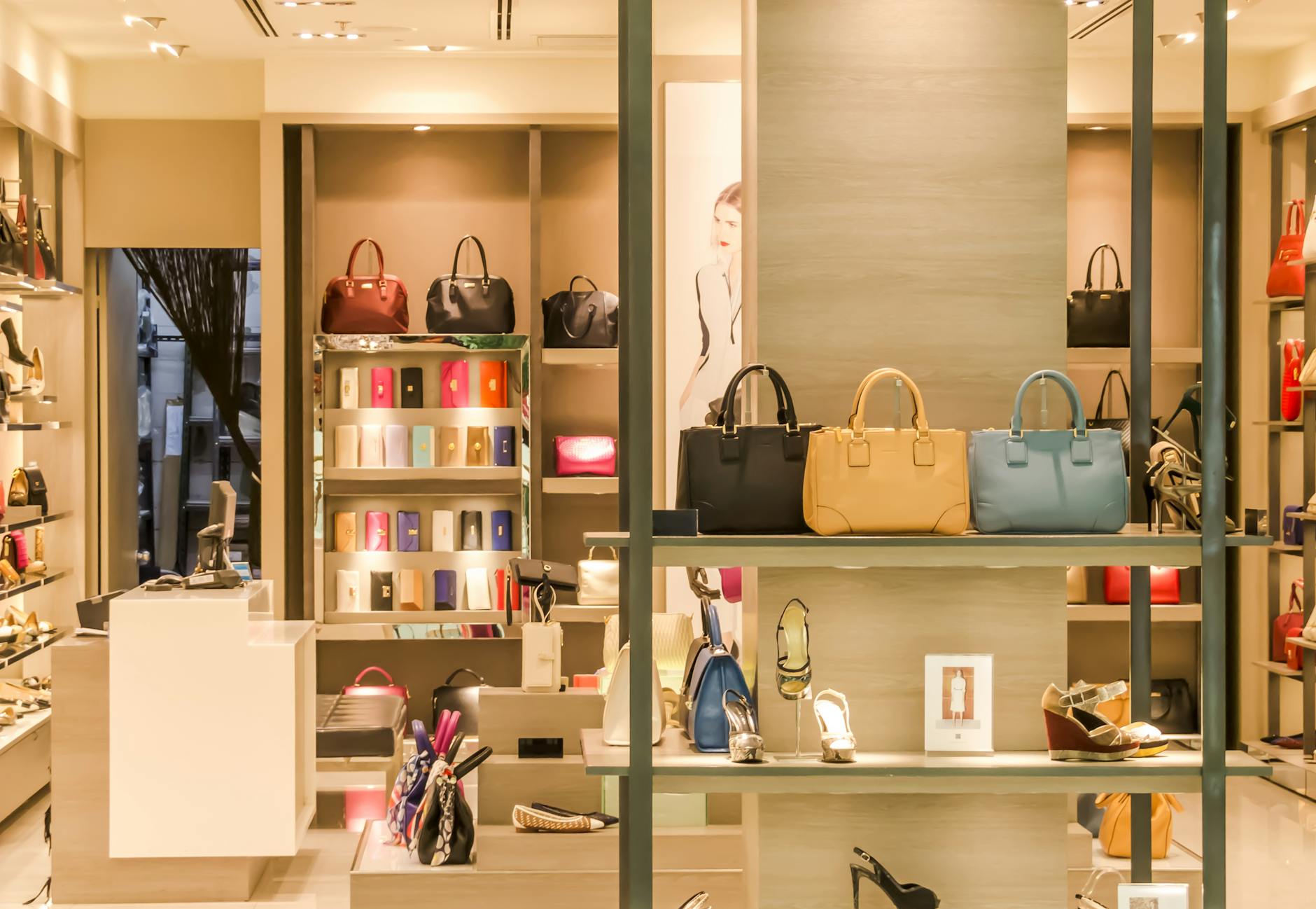
Obsessed, Justified, Regretful: The Emotional Rollercoaster of Owning an 'It' Bag
There is a very specific kind of grief that comes from opening your closet, spotting a designer handbag you once described as "a life investment," and feeling absolutely nothing. Not love. Not pride. Just a dull recognition, like running into someone from high school at a gas station. You nod. You move on. You grab the tote bag you got free at a wellness conference and head out the door.
This is the 'It' bag lifecycle, and it is one of the most reliable emotional arcs in modern American fashion. From the feverish first sighting to the quiet exile at the back of the shelf, every coveted bag follows the same tragic trajectory — and somehow, every single time, we are completely blindsided by it.
Stage One: The Sighting (A.K.A. The Infection)
It starts innocently. You're scrolling at 11 p.m. on a Tuesday — not even fashion content, just general chaos — and there it is. Some impossibly put-together person is carrying a bag you have never seen before, and your brain immediately files it under essential to survival.
The bag is unusual enough to feel new but familiar enough to feel accessible. It has a shape. Maybe a chain strap. Possibly a logo that's subtle enough to say "I know things" without screaming "I have debt." Within 48 hours you have Googled it, found the waitlist, watched three unboxing videos, and read a Reddit thread where someone calculated the cost-per-wear over a theoretical 10-year lifespan. You are not buying a bag. You are making a decision.
Stage Two: The Justification Era
This is where things get creative. The human mind, when it wants something expensive, becomes a Harvard-trained economist. Suddenly you're doing math you never learned in school.
"If I carry it every day for five years, that's basically twelve dollars a use." You have never carried anything every day for five years. You have three water bottles you rotate based on mood.
"It's a classic silhouette. It will never go out of style." You said this about a bag in 2019 that now lives in a donation pile.
"I'll stop buying coffee." You will not stop buying coffee.
The justification stage can last anywhere from two days to six months, depending on the price point and your current credit card situation. But it always ends the same way.
Stage Three: The Purchase High
The moment of acquisition is genuinely euphoric. Whether you scored it on a waitlist, found it on sale during a moment of divine retail alignment, or simply decided that your mental health required this purchase, the high is real. You carry the bag everywhere. You photograph it. You mention it in conversation in ways that are only slightly obvious. You feel, for a brief and beautiful window, like someone who has their life completely together.
This stage lasts approximately six to ten weeks.
Stage Four: Overexposure Dread
And then one morning you see it. Not your bag — the bag. On someone else. Then someone else. Then a woman in the Trader Joe's parking lot. Then an influencer you actively dislike. Then a character in a Netflix show, which means the prop department found it, which means it is officially over.
This is the overexposure dread phase, and it is uniquely cruel because nothing about the bag has changed. It is the same object you mortgaged your social life to obtain. But now it feels less like a discovery and more like a uniform. You start leaving it at home. You tell people you're "rotating your collection," which is a very sophisticated way of saying you have complicated feelings about a leather rectangle.
Historically, the bags that survive this stage are the ones with genuine staying power — think the Chanel Classic Flap, the Louis Vuitton Speedy, or the Bottega Veneta Pouch, which somehow managed to feel exclusive even after what felt like half of Instagram owned one. What separates the survivors from the casualties is usually a combination of timeless construction, brand heritage, and a silhouette that doesn't feel trend-dependent. The Loewe Puzzle bag is a good recent example of something that looked like a flash trend and turned out to have actual legs. The Jacquemus Le Chiquito, adorable as it was, peaked hard and fast — partly because a bag that can't fit a phone has a limited practical lifespan.
Stage Five: The Quiet Exile
At some point, without ceremony or announcement, the bag migrates to the back of the closet. It doesn't happen in a single dramatic moment. It's a slow drift — one day you grab something else, then again the next day, and suddenly three months have passed and the It bag is living behind your gym bag and a blazer you keep meaning to donate.
You still own it. You're not ready to sell it. You're also not ready to admit what it cost versus what it's worth to you now. So it just... lives there. Occasionally you'll see it and feel a flicker of something — affection, guilt, the ghost of a really good Tuesday in October — and then you'll close the closet door.
The Uncomfortable Truth About the Hype Cycle
Here's the thing nobody wants to say out loud: the 'It' bag is not really about the bag. It's about the feeling the bag represents — the version of yourself who carries it, the life that bag implies. When the cultural moment fades and the bag becomes ordinary, it stops doing that emotional work, and you're left with a very expensive leather good and a mild sense of having been played.
The bags that endure are the ones that stop being trend objects and become personal objects. The Chanel Flap your aunt carried in 1987 isn't an It bag anymore — it's a story. That's the transition every bag is quietly auditioning for: from hype to history.
Most of them don't make it. But every single one of them makes us feel, for a few glorious weeks, like we absolutely have it together.
And honestly? For twelve dollars a use, that's not nothing.