Exhibit A: Your Honor, I Bought This Sequined Cowboy Hat for the Bit

Opening Statement: The Case for Ironic Fashion
Your Honor, members of the jury, my client stands accused of purchasing a rhinestone-encrusted denim vest with fringe that could be seen from space. The prosecution claims this was an act of fashion terrorism. I'm here to prove it was simply performance art.
Welcome to Fashion Court, where America's most bewildering wardrobe choices finally get their day in the spotlight. Today's defendant? Every single person who has ever uttered the phrase "I'm wearing this ironically" while secretly hoping it would somehow transform them into the main character of their own life.
The Evidence Locker: What We're Actually Buying
Let's examine Exhibit A: the cowboy hat purchased by a software engineer from Brooklyn who has never been within 500 miles of actual livestock. The defense argues this $80 felt monstrosity was bought "for Halloween" in March, then mysteriously appeared in seventeen different Instagram stories throughout the summer.
Exhibit B presents an even more compelling case: the mesh crop top that cost more than most people's monthly streaming subscriptions. The defendant claims it was purchased "to make fun of fashion week," yet security footage shows them checking their reflection in every storefront window while wearing it.
The prosecution's strongest evidence? A closet containing three separate pairs of chunky white sneakers that retail for the price of a decent used car. Each purchase was justified as "making fun of dad fashion," yet the defendant now owns more athletic footwear than most actual athletes.
Character Witnesses: The Group Chat Testimony
The jury should note that every ironic fashion purchase comes with its own supporting cast of enablers. The group chat messages presented as evidence show a clear pattern:
"OMG yes, get it, you'd look so funny!" "Do it for the meme!" "Life's too short not to own a bedazzled fanny pack!"
These digital cheerleaders serve as accomplices in what fashion psychologists are calling "The Great American Ironic Purchase Epidemic." They provide the social validation needed to justify spending real money on fake ugly things that are actually expensive and kind of cute.
The Psychology of Plausible Deniability
Dr. Sarah Chen, Professor of Consumer Behavior at NYU, explains the phenomenon: "Ironic purchasing allows consumers to engage with trends they secretly love while maintaining social distance from potential judgment. It's fashion with training wheels."
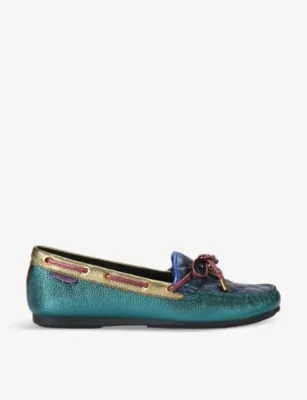 Photo: Dr. Sarah Chen, via images.selfridges.com
The ironic purchase serves as emotional armor. If someone compliments your neon platform boots, you can bask in the attention. If they hate them, well, that was the point all along. It's the perfect crime.
Cross-Examination: When Irony Becomes Identity
But here's where the defense falls apart: somewhere between the third wear and the first genuine compliment, ironic purchases often transform into beloved wardrobe staples. The jury need only look at the rise of dad sneakers, bucket hats, and literally anything involving tie-dye as evidence.
The defendant's browser history reveals seventeen different searches for "how to style bucket hats unironically" and a saved Pinterest board titled "Maybe I Actually Like This Look?" The prosecution rests its case.
The Verdict: Fashion Court's Final Ruling
After careful deliberation, Fashion Court finds the defendant guilty of using irony as a gateway drug to genuine style evolution. The sentence? Continue wearing whatever makes you happy, but please stop pretending you don't actually like that holographic jacket.
The truth is, America's ironic fashion purchases have become a billion-dollar industry built on our collective fear of admitting we like weird things. From Crocs collaborations with luxury brands to the complete mainstream adoption of what we once called "ugly" fashion, the line between ironic and iconic has completely dissolved.
In Defense of Fashion Chaos
Perhaps the real crime isn't buying questionable clothing under the protection of irony. Maybe it's the cultural pressure that makes us feel like we need an excuse to experiment with self-expression in the first place.
Your Honor, I submit that every ironic purchase is actually an act of bravery disguised as a joke. In a world where personal style has become increasingly algorithmic and safe, the willingness to buy something genuinely weird—even with a disclaimer attached—represents the last frontier of fashion rebellion.
Case dismissed. Court is adjourned. The defendant is free to continue their questionable purchasing habits, preferably with slightly more self-awareness and definitely better lighting for those mirror selfies.