The Scene of the Crime
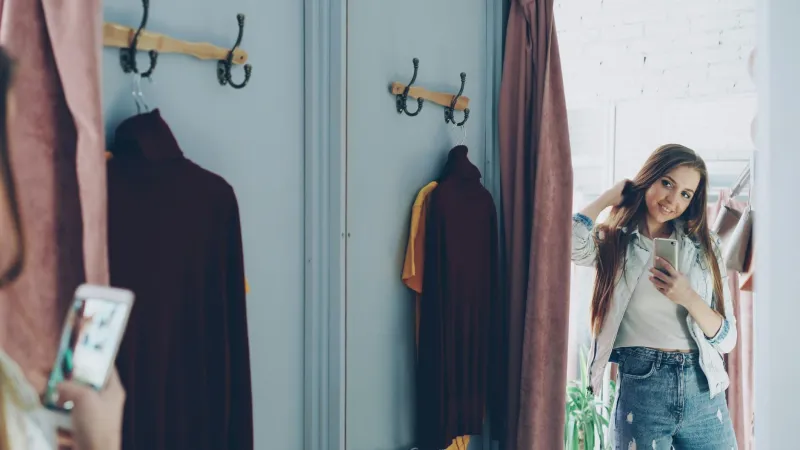
Picture this: You're standing in a dressing room, bathed in what can only be described as the golden hour lighting of retail heaven. The blazer hugs you in all the right places. Your legs look longer. Your confidence? Through the roof. You practically skip to the register, credit card already warming up for action.
Fast forward to Tuesday morning. Same blazer, same body, completely different universe. Suddenly you look like you're playing dress-up in your older sibling's clothes, and not in the chic, oversized way that fashion magazines promise. You look in your bathroom mirror and wonder if you've been punk'd by the entire fashion industrial complex.
Spoiler alert: You absolutely have.
The Lighting Conspiracy Is Real and It's Spectacular
Retail stores didn't accidentally stumble into lighting that makes everyone look like a glowing goddess. This is a calculated operation involving color temperature, angle placement, and what can only be described as optical wizardry. Store lighting typically runs between 2700K to 3000K on the color temperature scale—warm enough to make your skin look healthy and vibrant, but not so warm that you notice the slight yellow tint that's doing half the heavy lifting.
Meanwhile, your bathroom fluorescents are out here serving you harsh reality at 4000K, revealing every texture, wrinkle, and fit issue with the enthusiasm of a forensic investigator. It's not that your home lighting is bad—it's just honest, and sometimes honesty hurts.
Mirror, Mirror on the Retail Wall
Then there's the mirror situation, which deserves its own documentary series. Store mirrors aren't just reflective surfaces—they're carefully angled confidence boosters. Many are tilted slightly forward at the bottom, creating a subtle lengthening effect that makes you look taller and leaner. Some stores use mirrors with a slight curve that adds dimension in all the right places.
Your mirror at home? It's hanging straight on the wall like some kind of amateur, telling you the unvarnished truth about proportions and fit. How dare it maintain its integrity.
The Psychology of Dressing Room Optimism
But here's where it gets really interesting: even if stores used regular lighting and standard mirrors, we'd probably still fall for the dressing room delusion. There's something psychologically intoxicating about trying on clothes in a designated "transformation space." The act of changing clothes triggers a mental shift—we're not just putting on a garment, we're trying on a new version of ourselves.
In that moment, we're not thinking about Tuesday morning meetings or weekend errands. We're thinking about the idealized life where this blazer makes perfect sense, where we're the type of person who wears statement shoulders to coffee dates and looks effortlessly put-together doing it.
The Fabric of Reality
Let's talk about how clothes actually behave in the wild versus their dressing room audition. In stores, clothes are steamed, pressed, and positioned to perfection. They're hanging at the optimal angle, free from the wrinkles of real life. The moment you buy something and wear it into your actual existence, it has to contend with car seats, desk chairs, and the general chaos of human movement.
That silk blouse that looked so crisp and professional? It's now dealing with your morning commute, your tendency to gesture enthusiastically during meetings, and the fact that you definitely spilled coffee on it by 10 AM. The dressing room didn't prepare it for this level of real-world contact sport.
The Home Fitting Room Reality Check
So what happens when you get home and try on your purchase in your natural habitat? Everything changes. The lighting is different. The mirror is honest. You're not in "shopping mode" anymore—you're in "will I actually wear this to work" mode, which is a much more practical and significantly less forgiving headspace.
Suddenly, that dress that looked like pure elegance in the store feels too tight in the arms when you try to reach for your laptop bag. The pants that seemed perfectly cropped now look awkward with the shoes you actually own. The blazer that made you feel like a fashion editor now makes you feel like you're borrowing clothes from someone with completely different proportions.
Why We Keep Falling for It
Here's the thing: knowing about the dressing room deception doesn't make us immune to it. If anything, it makes the whole experience more fascinating. We're all complicit in this beautiful lie because, for a few minutes in that perfectly lit box, we get to feel like the best version of ourselves.
And maybe that's not entirely a bad thing. Maybe the dressing room serves as a brief vacation from our regular lives, a space where possibility feels tangible and transformation seems as simple as putting on different clothes.
The Verdict
The dressing room deception is real, it's sophisticated, and it's probably not going anywhere. Stores have invested too much in the science of making us feel good about ourselves (and their merchandise) to abandon these tactics now.
But armed with this knowledge, maybe we can approach dressing room experiences with a healthy dose of skepticism and a sense of humor about the whole elaborate production. That blazer might not look the same at home, but at least now you know why—and you can decide whether the brief moment of dressing room magic was worth the price of admission.