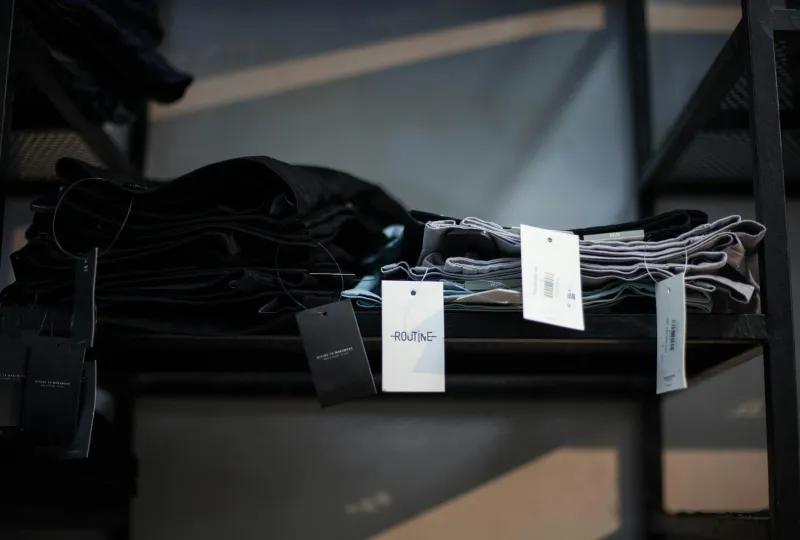
Case File #1: The Serial Tag Keeper
Suspect: Jennifer M., 31, Marketing Manager, Brooklyn Evidence: One $240 midi dress, tags intact, purchased 14 months ago Modus Operandi: "Strategic non-commitment with intent to return"
The dress hangs in Jennifer's closet like a beautiful, expensive ghost. She bought it for her college roommate's wedding, convinced it would be perfect. The wedding came and went — Jennifer wore a black wrap dress she'd owned for three years instead. But the midi dress remains, tags dangling like tiny white surrender flags.
"I keep the tags on everything now," Jennifer confesses during interrogation. "It's like insurance. I tell myself I'll return it if I don't wear it within 30 days, but then 30 days becomes 60, and 60 becomes 'I'll definitely wear this to something soon.'"
The evidence suggests Jennifer has been operating this scheme for years. A preliminary closet search reveals:
- One blazer with tags (8 months)
- Three blouses, various tag retention periods
- A pair of statement earrings still in their original packaging
- Two pairs of shoes that have never touched pavement
Case File #2: The Size Optimist
Suspect: Michael K., 28, Software Developer, Austin Evidence: Designer jeans in a size that "used to fit" and "definitely will again" Crime: Purchasing clothes for a future version of himself
Michael's case represents a particularly tragic subspecies of tag-keeping criminal: the size optimist. These perpetrators buy clothes in sizes that don't currently fit, maintaining the tags as evidence of their unwavering belief in personal transformation.
"I bought these jeans when I started my new workout routine," Michael explains, gesturing toward $180 denim that's never left the hanger. "They were motivation. Goal pants. The tags staying on wasn't intentional — they just never... fit the way I expected."
Expert analysis reveals this is a common pattern among size optimists. Dr. Sarah Chen, a consumer psychologist, notes: "They're not buying clothes; they're buying hope. The tags represent possibility, and removing them would mean admitting the possibility might not happen."
Case File #3: The Occasion Hoarder
Suspect: Lisa R., 35, Teacher, Portland Evidence: Multiple "special occasion" pieces awaiting their moment Pattern: Chronic over-preparation for events that exist primarily in imagination
Lisa's closet reads like a catalog of optimistic life planning. There's the cocktail dress for work parties that never happen. The statement necklace for "when I want to feel fancy." The leather jacket that's waiting for her to become the type of person who wears leather jackets.
"I'm always buying clothes for the person I think I'm about to become," Lisa admits. "Like, I bought this incredible jumpsuit because I was convinced I was entering my 'jumpsuit era.' Turns out I'm still in my 'jeans and sweater' era, and the jumpsuit is just... waiting."
The tags on Lisa's unworn pieces tell a story of aspirational shopping gone wrong. Each item represents a version of herself she was convinced she'd grow into, if only she had the right outfit to facilitate the transformation.
The Psychology of Permanent Procrastination
Forensic shopping psychologist Dr. Rachel Martinez has studied this phenomenon extensively. "Tag retention is essentially a form of commitment phobia," she explains. "These individuals want the satisfaction of owning something beautiful without the responsibility of actually integrating it into their lives."
The tags serve multiple psychological functions:
- Safety net: The illusion that the purchase isn't permanent
- Possibility preservation: Keeping options open indefinitely
- Guilt management: "I can still return it" becomes a mantra of self-forgiveness
- Identity flexibility: The clothes represent potential selves they're not ready to commit to
Case File #4: The Return Window Fugitive
Suspect: Amanda T., 26, Graphic Designer, Chicago Evidence: $350 worth of clothes purchased with full intention of returning Crime: Missing multiple return deadlines through strategic procrastination
Amanda represents the most dangerous type of tag-keeping criminal: the return window fugitive. These suspects buy clothes knowing they'll probably return them, then systematically avoid the return process until it's too late.
"I set calendar reminders," Amanda insists. "I put the return deadline in my phone. But then the day comes, and suddenly I need to 'think about it one more day.' Before I know it, I'm past the return window and stuck with a $200 top I've never worn."
Security footage from Amanda's apartment reveals a pattern of return avoidance behaviors:
- Walking past the shopping bag multiple times without picking it up
- Researching return policies without actually initiating returns
- Trying items on repeatedly "just to be sure"
- Finding excuses to postpone return trips
The Great Tag Removal Ceremony
For recovering tag-keeping criminals, the moment of tag removal becomes a significant psychological event. It represents commitment, acceptance, and the death of infinite possibility.
"When I finally cut the tags off my expensive dress, it felt like a funeral," says former tag-keeper Sarah P. "I was mourning all the other dresses I could have bought instead, all the different versions of myself I could have been. But then I wore the dress to brunch, and it was... fine. Good, even. The world didn't end."
The Evidence Room
A survey of American closets reveals the scope of this epidemic:
- 73% of Americans have at least one item with tags still attached
- The average tag-retention period is 8.5 months
- 42% of tagged items will never be worn
- The most common tag-keeping crimes involve special occasion wear and "investment pieces"
The Statute of Limitations
Legal experts suggest there should be a statute of limitations on tag-keeping. "After 12 months, the tags should be considered permanently attached," argues consumer rights attorney David Kim. "At that point, you're not planning to return the item — you're just afraid to commit to owning it."
Rehabilitation Programs
Several support groups have emerged for chronic tag-keepers:
Tag Cutters Anonymous: Weekly meetings where participants practice removing tags in a supportive environment
The 30-Day Challenge: Commit to wearing or returning every tagged item within 30 days
Tag Intervention: Friends and family stage interventions for loved ones with severe tag-keeping problems
The Verdict
Perhaps tag-keeping isn't a crime at all — perhaps it's a coping mechanism for living in a world of infinite choices and finite closet space. Maybe those dangling tags represent something beautiful: the human capacity for hope, optimism, and the belief that we can always become someone new.
Or maybe we just need to admit that we bought a $300 dress we're never going to wear and cut the damn tags off.
The evidence speaks for itself. The question is: are we ready to face it?