The Awakening
It started innocently enough. I double-tapped a photo of someone wearing a vintage band tee styled with wide-leg jeans, and suddenly my entire Instagram feed transformed into a carefully curated vintage rock aesthetic mood board. Within 48 hours, I was the proud owner of three band tees for groups I'd never heard of and a pair of jeans that cost more than my monthly coffee budget.
The algorithm had spoken, and apparently, it knew exactly who I was supposed to be.
The New Personal Stylist
Forget Rachel Zoe. Forget hiring expensive consultants who tell you to "invest in quality basics." The most influential stylist in America today doesn't have a name or a face — it's a complex web of data points, purchase histories, and behavioral predictions that lives inside our phones.
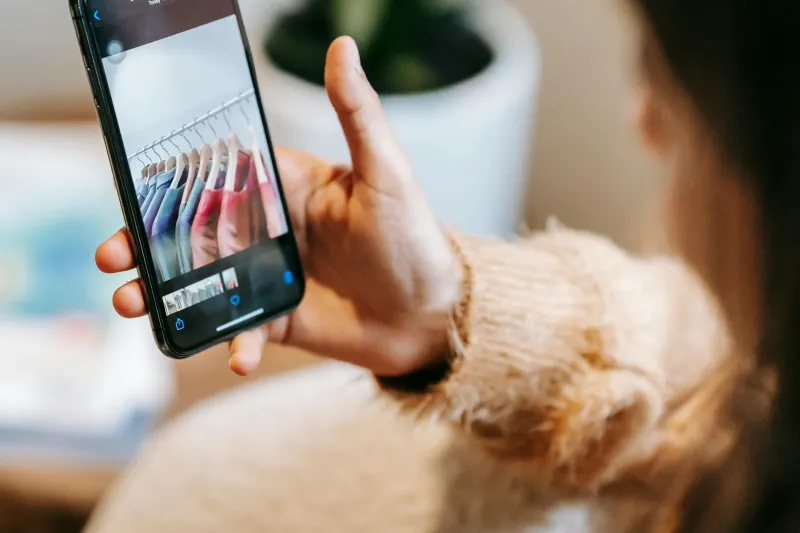
TikTok's For You Page has become America's most trusted fashion advisor, serving up outfit inspiration with the precision of a Swiss watch and the addictive qualities of your favorite reality TV show. The algorithm doesn't just show you clothes; it shows you a lifestyle, a vibe, an entire personality upgrade wrapped in a 15-second video.
"I used to spend hours trying to figure out my 'personal style,'" says Maya, a 26-year-old marketing coordinator from Austin. "Now my phone just shows me exactly what I want to wear before I even know I want to wear it. It's honestly kind of scary how accurate it is."
The Science of Digital Intuition
The algorithm knows things about us that we haven't even admitted to ourselves. It tracks how long we linger on certain posts, which colors make us pause our scrolling, what time of day we're most likely to make impulse purchases. It notices that we screenshot outfit photos but never actually save them to folders. It sees us coming before we see ourselves.
Dr. Amanda Chen, a digital behavior researcher at Stanford, explains: "These algorithms are essentially predicting desire before it's conscious. They're identifying patterns in your behavior that suggest you're ready for a style evolution, sometimes months before you realize it yourself."
The result? We're living in an era of preemptive fashion influence. The algorithm doesn't wait for us to develop taste — it develops our taste for us, feeding us a steady stream of "aesthetic" content until we internalize it as our own preference.
The Cottage Core Conspiracy
Remember when half of America suddenly decided they were cottage core? When millions of people who had never expressed interest in prairie dresses or mushroom foraging suddenly couldn't stop buying flowy midi skirts and straw hats?
That wasn't organic cultural evolution — that was algorithmic coordination on a massive scale. The algorithm identified a mood (pandemic escapism), matched it with an aesthetic (rural romanticism), and delivered it to exactly the right people at exactly the right moment.
"I went from wearing exclusively black jeans and crop tops to owning seven floral dresses in the span of two months," admits Jessica from Portland. "I kept telling people I was 'discovering my feminine side,' but really, TikTok just convinced me I was a cottagecore girl. And you know what? I kind of am now."
The Targeted Ad Prophecy
The most unsettling part isn't that the algorithm influences our style — it's how good it's gotten at predicting exactly when we're vulnerable to influence. Those Instagram ads for sustainable jewelry that show up right after you've been doom-scrolling climate change content? Not a coincidence. The vintage Levi's ad that appears the day after you complain about fast fashion? The algorithm saw you coming.
"I swear my phone can sense when I'm having an identity crisis," says David, a 29-year-old teacher from Seattle. "Last month I was questioning my whole career path, and suddenly every ad was for 'elevated basics' and 'investment pieces for the modern professional.' I bought a $180 button-down shirt I've worn twice."
The Authenticity Paradox
Here's the existential crisis keeping fashion philosophers awake at night: if an algorithm influences your style choices, are they still authentically yours? When your "personal aesthetic" is shaped by data-driven content curation, what does personal even mean?
The answer might be more nuanced than we think. Maybe the algorithm isn't creating our desires — maybe it's just really good at recognizing desires we didn't know we had. Maybe it's holding up a mirror to parts of ourselves we hadn't explored yet.
"I used to think my style was boring," says Priya, a 24-year-old grad student from Boston. "Then the algorithm started showing me maximalist fashion content, and I realized I'd been suppressing this whole colorful, pattern-mixing side of myself. Now I dress like a walking art project, and I've never felt more like myself."
The Resistance Movement
Of course, not everyone is ready to surrender their sartorial autonomy to Silicon Valley. A growing number of people are attempting "algorithm detoxes" — deliberately engaging with content outside their predicted preferences to confuse the system.
"I started liking posts about minimalist fashion just to see what would happen," explains Carlos from Denver. "Now my feed is split between dark academia and Scandinavian simplicity. I think I broke it, but my style has never been more interesting."
The Future of Algorithmic Fashion
As AI becomes more sophisticated, we're moving toward a future where our phones might not just suggest what to wear, but actually design clothes specifically for us. Imagine algorithms that create custom pieces based on your unique combination of lifestyle data, body measurements, and aesthetic preferences.
We're already seeing early versions of this with apps that generate personalized outfit recommendations and brands using AI to predict trend cycles. The question isn't whether this will happen — it's whether we'll embrace it or resist it.
The Verdict
Perhaps the most honest thing we can admit is this: the algorithm might actually be better at understanding our style than we are. It doesn't have the emotional baggage we carry about our bodies, our budgets, or our perceived limitations. It just sees patterns and possibilities.
Maybe that's not such a bad thing. Maybe letting our phones dress us is just the next evolution of personal style — one where we collaborate with technology to become more authentically ourselves, even if that authenticity is algorithmically enhanced.
After all, if the result is feeling more confident in our clothes and more excited about getting dressed, does it really matter who (or what) picked out our outfit?
The algorithm is listening, learning, and serving up our next style evolution. The only question left is: are we ready to trust it?